

Explore the Cistercian Route
Walking the Cistercian Route means discovering an itinerary full of spirituality, nature and history. In addition, it passes through the regions of Alt Camp, Conca de Barberà and Urgell. It was created in 1989 to highlight the rich cultural, historical, gastronomic, artisan and landscape heritage of these lands.
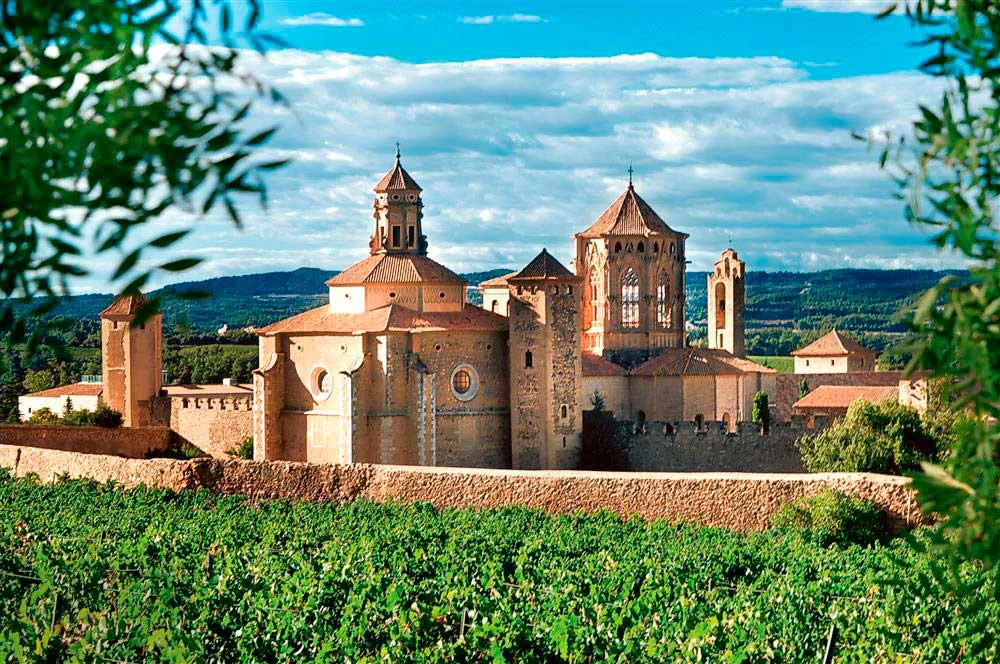
The Cistercian Route includes three important monasteries. They are three jewels of the Cistercian tradition: Poblet Abbey in Conca de Barberà, Santes Creus in Alt Camp and Vallbona de les Monges in Urgell. Today, Poblet and Vallbona still have monastic communities. The former is home to monks, while the latter is home to nuns. However, the Cistercian Route goes beyond these monasteries. It also offers the chance to discover areas rich in traditions, culture, landscapes and wines.
The surroundings of the Cistercian Route
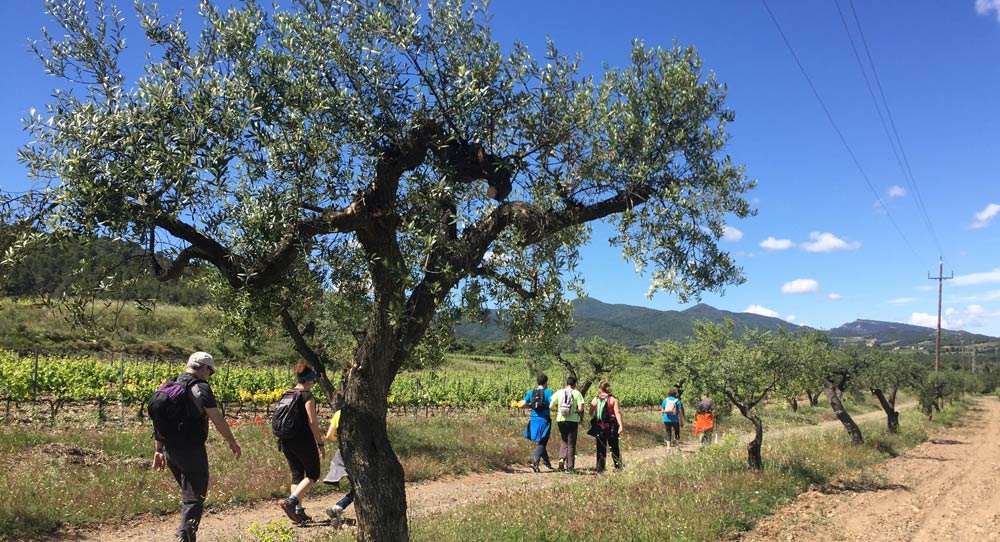
The Cistercian Route is 105 km long and circular. Therefore, it can be completed in different stages. You can also travel along it on foot, by car, on horseback or by mountain bike. As a result, there are options for everyone.
The route we suggest lets you enjoy the natural and monastic spaces along the itinerary. In addition, you can discover wineries, villages, castle ruins and fortifications. Halfway between Vallbona de les Monges and Santes Creus, you will find Rocafort de Queralt winery. It is one of the seven cooperatives that make up Domenys Conca wineries. Moreover, it is known as the “Wine Cathedral” and is a good example of 20th-century Modernist architecture.
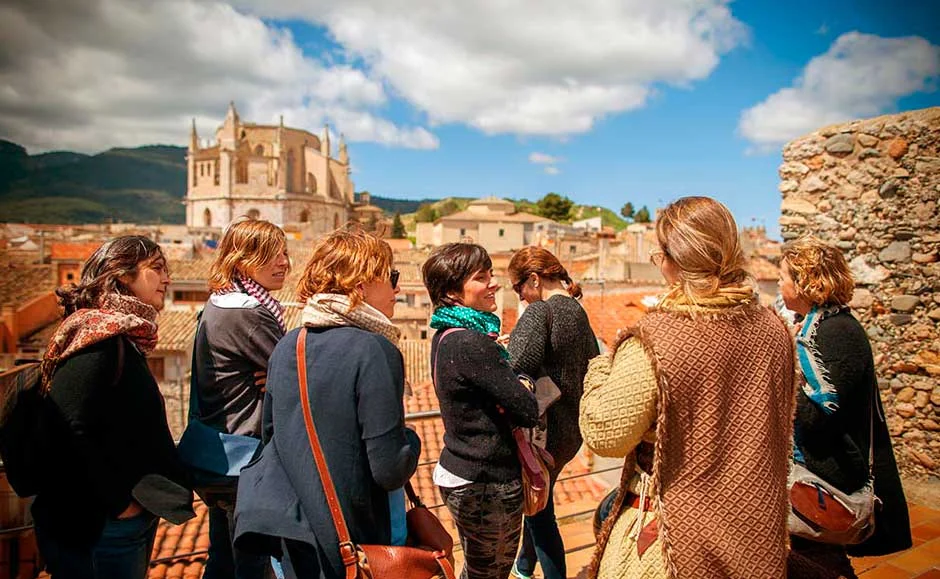
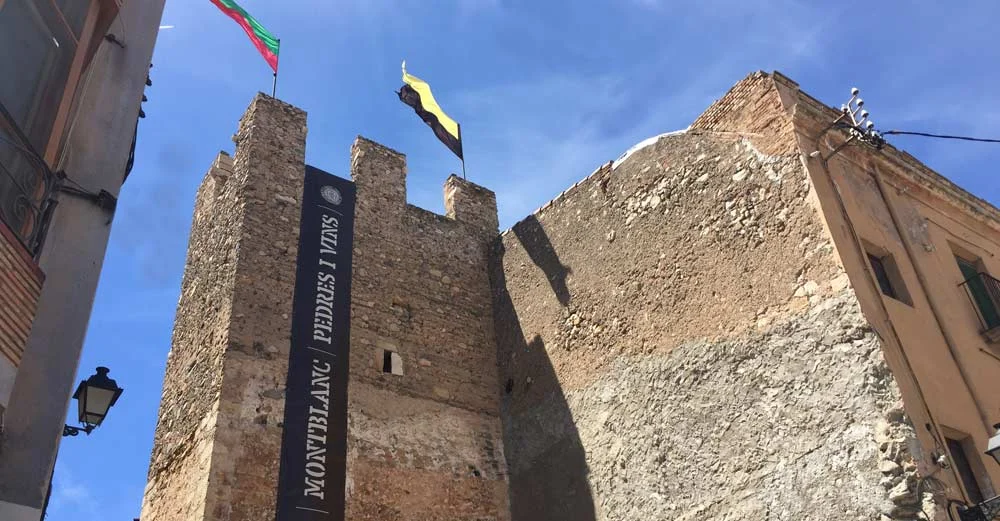
Also, you can let your imagination wander through the walled streets of the medieval village of Montblanc.
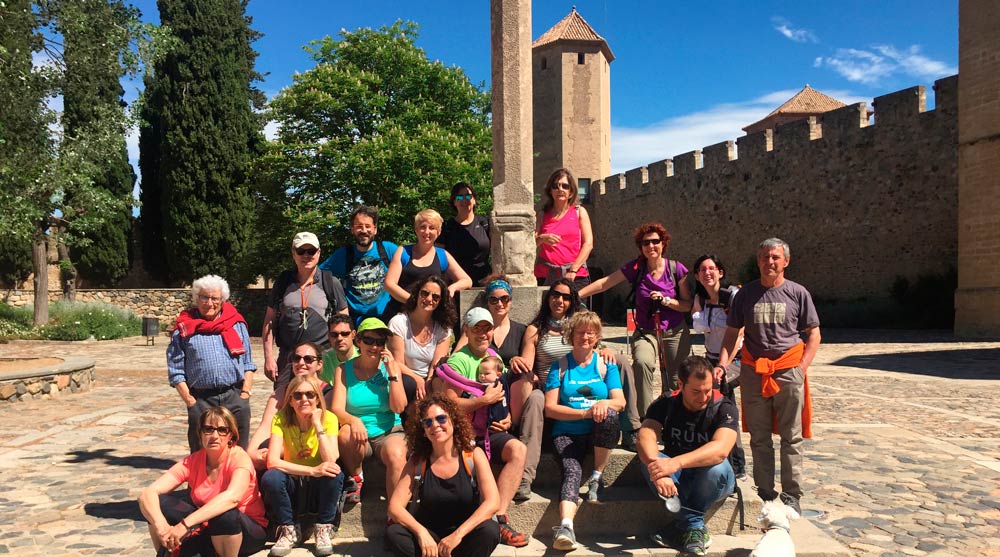
In 1996, the Xiruca Foradada Hiking Club created an itinerary along the roads between the three monasteries. The route crosses several municipalities. Later, it was approved as the GR-175 long-distance trail. Over the years, different variants and alternatives have been added. In this way, hikers of different levels and cyclists can enjoy the area.
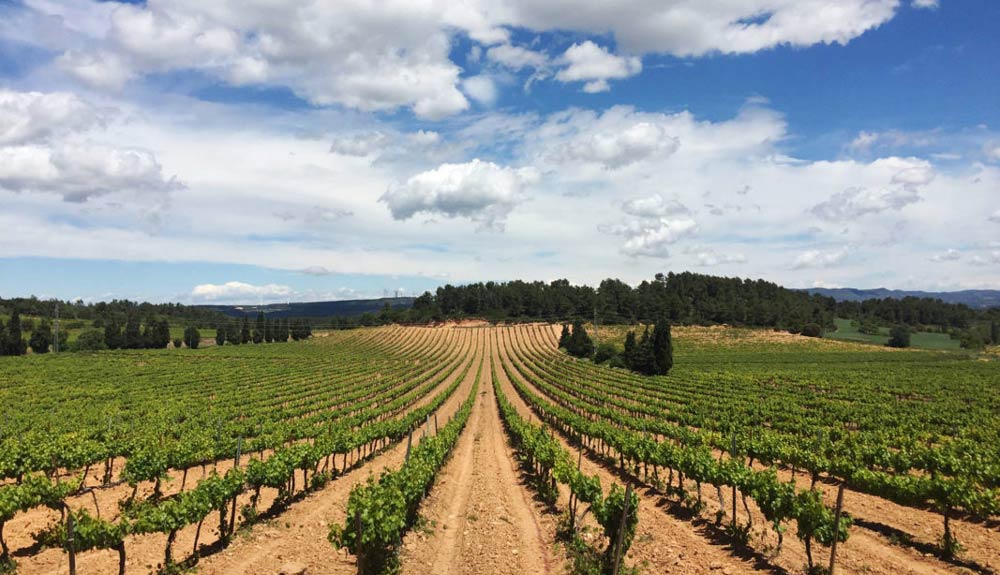
The route goes through fields, olive groves and vineyards. Then, it continues through forests and protected areas. These include the Poblet Natural Area, the Prades Mountains and Tossal Gros de Miramar.
Spirituality on the Cistercian Route
The first Cistercian monks appeared in France at the beginning of the 10th century. At that time, they promoted a reform in response to the excesses of the Benedictines. Later, they arrived in Catalonia during the 12th century.
The Cistercian Order is characterised by simplicity, community life, work and prayer. In addition, it seeks harmony with the cycles of nature. For this reason, the first monks lived in mountain caves. They sought a connection with God through austerity and peace.
Later on, they began to build monasteries. These followed the same principles of purity, austerity and isolation from the world. At the same time, they integrated harmony with nature and the surrounding environment.
Walking the Cistercian Route also allows you to experience special moments. For example, you can take part in an evening prayer among the monks’ chants after a day of hiking through the Poblet forest.
In addition, you can stay in one of the monastery accommodations. The next morning, you can walk among the vineyards of Conca de Barberà or through the fields of Urgell. Finally, you can explore the Monastery of Santes Creus and finish with a visit and wine tasting at the Visendra winery.
The monasteries of the Cistercian Route
The Cistercian Route includes three of the most important Cistercian monasteries in Catalonia. They are the Royal Monastery of Santes Creus in Aiguamúrcia, Poblet Abbey in Vimbodí i Poblet and the Monastery of Santa Maria de Vallbona in Vallbona de les Monges.
Monastery of Santes Creus
The Monastery of Santes Creus was founded in 1160. Later, it reached its greatest splendour between the 13th and 14th centuries. This growth was linked to the nobility and royal lineage.
It is one of the most important monasteries in Catalonia. Moreover, it stands out for its history, monumental value and good state of conservation. Today, it is the only monastery on the Cistercian Route without an active monastic community.
The monastery contains several architectural styles. For example, you can see the Romanesque façade with Gothic stained glass and interior altarpieces from the 17th century. Therefore, the monastic complex is one of Catalonia’s medieval treasures.
Poblet Abbey
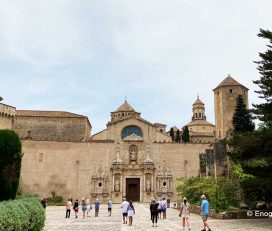
Poblet Abbey is one of the largest and most important monasteries in Europe. Its construction began in the 12th century and continued for several centuries. As a result, the complex features different architectural styles.
Its highlights include the main altar altarpiece, the Gothic chapel of St. George and the grand royal gate. The latter is flanked by two octagonal towers. In addition, the monastery was declared a World Heritage Site in 1991.
You can also discover the monastic life of the site. For example, visitors can see the monastic community and tour different areas open to the public. These include the refectory, dormitories and winery.
Monastery of Vallbona de les Monges
The Monastery of Santa Maria de Vallbona, popularly known as Vallbona de les Monges, was founded in the 12th century. Since then, it has maintained uninterrupted monastic life for 800 years. It is also the most important female Cistercian community in Catalonia.
It is the smallest and most austere of the three monasteries. For this reason, it can be considered the most Cistercian of the route. It is also the least known of the three.
However, it has a fascinating history. Since the 13th century, it was a monastic school where the daughters of the nobility were educated. In addition, the monastery has always been a centre of contemplative life, culture, work and prayer devoted to divine service.
Tickets for the monasteries of the Cistercian Route
You can buy a separate ticket for each monastery. Alternatively, you can buy a combined admission ticket for €15. This ticket is valid for two years. However, it does not include guided tours or audio guides.
There is also the 6T card, which is free and can be downloaded online. It has six empty boxes that must be stamped. In this way, you can obtain the 6T Diploma, which certifies completion of the GR-175 itinerary. There can be no more than one stamp from the same town. In addition, there must be at least one stamp for each section between monasteries.
No Title
Una ruta genial para realizar a tramos. Nosotros hicimos l a ruta desde el monasterior de poblet hasta espluga pasando por les masies. Allí visitamos la cooperativa y comimos en el Art restaurant. un dia genial

No Title
Me he quedado a dormir en el monasterio de poblet con los monjes y ha sido sin duda la mejor experiencia de mi vida. Todo es muy austero y espartano… es lo que esperaba, pero compartir 3 días con los monjes a sido algo muy auténtico, real y sin postureos.

No Title
Vam fer la ruta seguitn el gr 175 amb un grup d’amics. vam matinar i sortir de montblanc per arribar a prenafeta. abans i segons recomanacio de Vins i Camins i de la enoguia als que agraim la recomanacio vam aturarnos a conèixer els vins biodinamics del celler escoda sanahuja. el joan ramon va ser un perfecte amfitrió i desprès de parlar molt amb ell i coneixer els secrets de la seva elaboració vam continuar fins a prenafeta per dinar a cal gaya. La tornada la vam fer pel mateix lloc fins els cotxes

No Title
Espectacular salida en bicicleta atravesando solivella i blancafort. Nos desviamos algo de nuestra ruta pero valió la pena y aunque queríamos hacer la ruta de forma circular y no fue posible, fue una gran salida.
os dejo el link de la ruta
https://es.wikiloc.com/rutas-senderismo/gr175-6-la-ruta-del-cister-variant-per-blancafort-i-solivella-28727451

No Title
Nos hemos hospedado en el castell de riudabella, allí hemos conocido a la familia que vive en est magnífico lugar, y realizamos una cata para conocer los vinos que elaboran. Durante el fin de semana que hemos estado pudimos ir caminando hasta poblet y visitar el monasterio. Gracias Pieter.

